“According to Johannes Fabian, the Denial of Coevalness is a mechanism of distancing oneself not through space, but through time. A mechanism that refuses to consider members of other cultures as fully belonging to the present, attributing them another temporality, which tends to be backward.
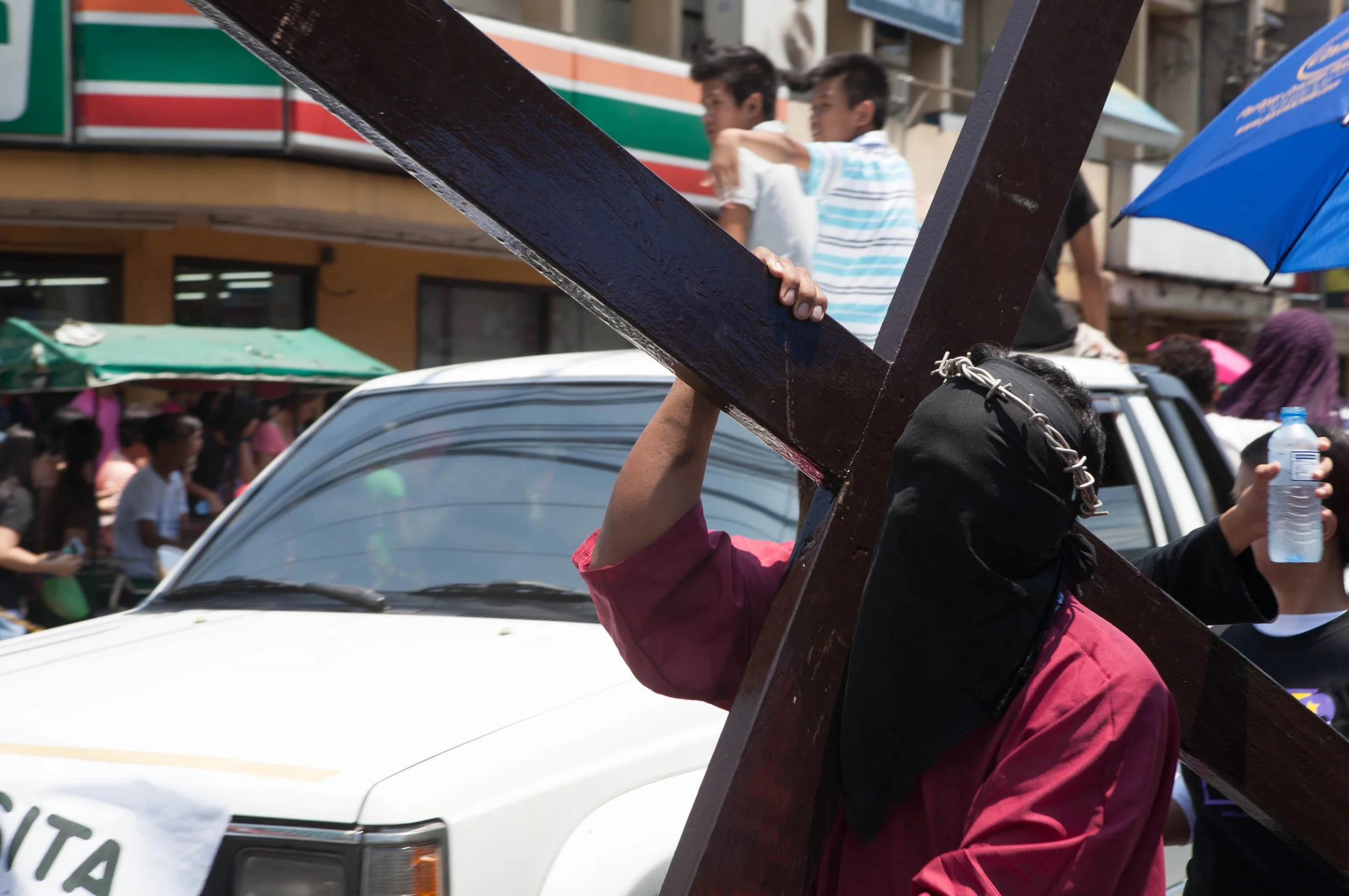
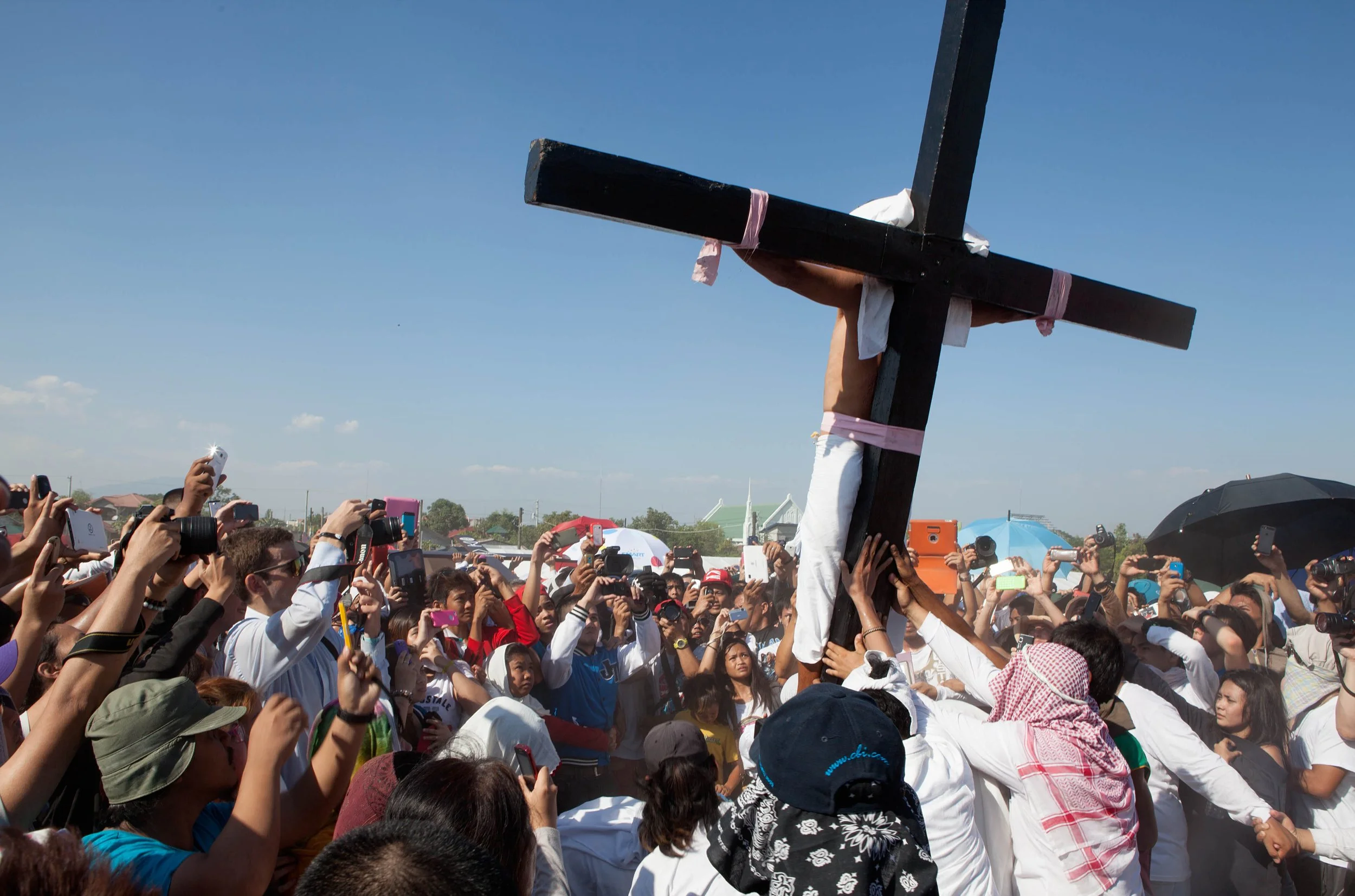
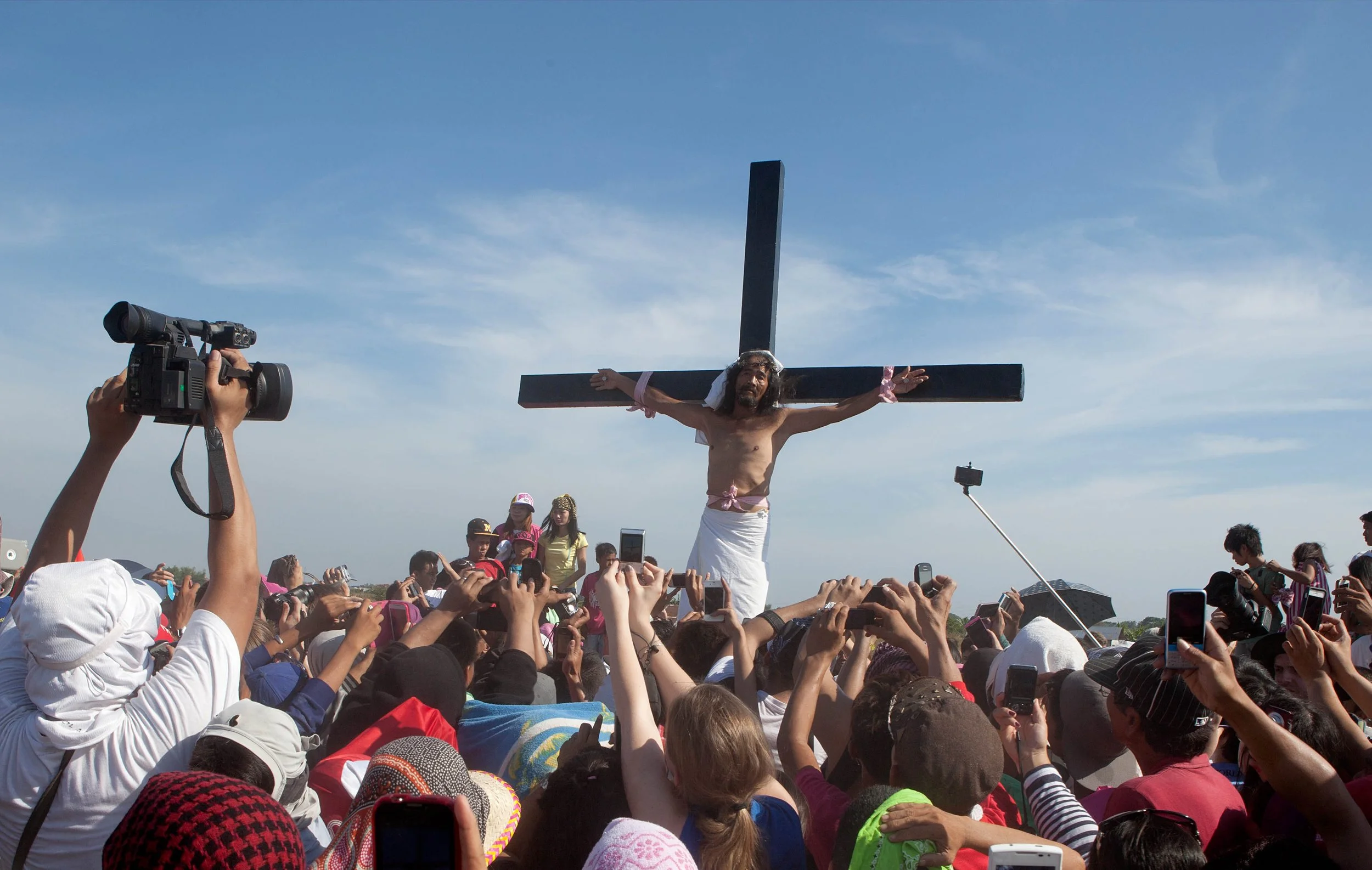
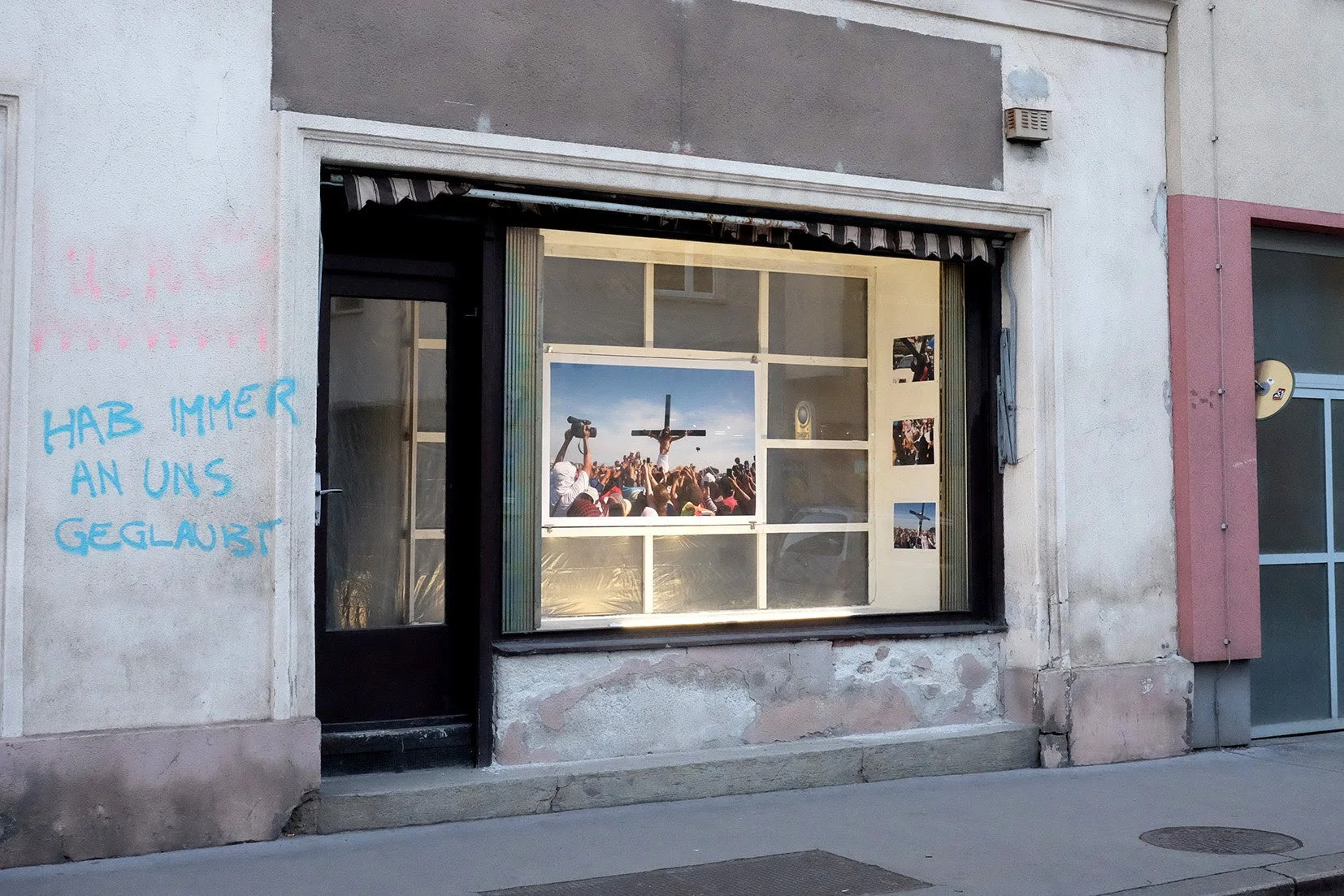
The works of the Italian-Filipino photographer Melissa Peritore are documentations of her stay in the Philippines, which lasted almost 5 years. The excerpt on display shows the self-crucifixions that took place in the pilgrimage site of Kapitangan as part of the Passion Play. The photographs are arranged in chronology with the biblical events: Carrying of the Cross, Nailing to the Cross, Erection of the Cross and the Crucifixion in its full extent. The shots create a moment of alienation by transposing a universally known scene into a different cultural context that is rather unfamiliar to us. The tendency to label what we see with the attributes “archaic” or “outmoded” results from the attempt to situate the images in our preconceived system of perception (a process coined by Kaja Silverman under the term gaze). Technical objects as well as urban elements that mark the scene as present, question the structures of our preformed gaze. With the help of the attributes used, we seem to assign a different physical time to the culture presenting itself to us to distance ourselves from it: We deny the real action - that of the crucifixion - the contemporaneous existence to our Western culture and thus deny the simultaneous occurrence of local traditions of Filipino culture.
We thereby apply Fabian’s theory of Denial of Coevalness. By placing the described culture into the construct of our historical chronology, we assign a position to this culture in a system of power that we have created. In this way, we try to understand this culture from our Eurocentric perspective. Peritore’s photographs are about tensions of such negation of simultaneous actions, feelings and events. The works are able to draw us in for a familiar scene but make us pause for a moment and ask us to reflect on our own perspective on culture and society. The pictures formulate - if we stay within the theme of the Christian story of salvation - an appeal to the resurrection of acceptance and internalisation of cultural coevalness.” —Helena Lang